
从设计师到 Build in Public:我的新起点

从设计师到 Build in Public:我的新起点
为什么我相信 AI + Web3 会是未来的方向
这是我在自己搭建的博客平台上发布的第一篇内容。
它代表着一个转变。
从设计师,到开发者。
更准确地说,是一个 vibe coder。
算上这个博客,这是我用 AI 协作完成的第 20 个项目。
如果放在两年前,我大概不会相信自己会用代码构建产品。
但时代在变。
时代的转动
故事要从 2025 年 7 月说起。
在小红书刷到 Tin Tin Land,后来参加了湖畔的 Adventure X。
非常偶然地,我进入了 Injective 的 codecamp,解锁了代码生涯。
疫情之后,我所在的时尚行业遭遇巨大冲击。
欧美外企逐渐撤出中国。
本科英文专业的我,一直希望在国际化设计环境中工作。
但机会在减少。
2024 年 9 月,我面试一家美国公司。
历经 5 个月,7 轮面试。
最终因为预算下降、国内业务剥离,没有谈拢。
那是我第一次明显感受到时代的变化。
毕业以来,我几乎没有经历过求职挫折。
但这一次,我意识到——
我不能再依赖过去的路径。
设计、科技与转型
这些年和 ChatGPT 深度协作,让我看到了另一种可能。
两年多时间里,它帮我梳理知识结构、优化简历、整理行业报告、分析人格优势。
它不是工具,更像 co-pilot。
设计从来不是图形学。
它是社会洞察、心理学、艺术史、结构思维的综合。
但在国内语境中,设计常常被当作“美的执行”。
设计师是执行端,而非决策核心。
而西方设计传统,从包豪斯开始,设计师是社会实践者,是结构构建者。
当行业结构发生变化时,我明白一件事:
我要转型。
AI + Web3:能力结构的重建
2025 年 7 月进入 codecamp 时,我并不害怕不会写代码。
因为我知道,我可以问 AI。
事实证明,确实如此。
从 Injective 开始,我接触 Solidity、EVM、Bitcoin。
后来参加 Polkadot PBAX Wave4,也获得优秀学员。
目前参加了 7、8 个训练营,完成了自己的第一个 Web3 设计项目。
我读白皮书,读协议文档。
Bitcoin、Ethereum、Polkadot 的生态逻辑,我都系统研究过。
我习惯从行业结构、经济形态去理解技术。
代码不是孤立技能。
它是结构的一部分。
我如何与 AI 协作
最近,我开始尝试一种新的方式:
- NotebookLM 做 research 和信息结构
- 用 Markdown 输出清晰结构
- Cursor 根据结构搭建项目框架
- 用 Design Token Table、Component Tree、State Machine 等工具
- 把设计转化为机器可读的数据
这极大减少了无效沟通。
最近一个月,我没有再遇到“屎山”。
NotebookLM 规划一周的项目,我 3 天可以完成前后端搭建。
期间,我没有真正“写代码”。
只是和 Cursor Agent 协作,在 terminal 做验证。
AI 不是替代创造。
它是在放大创造。
协作工具指南
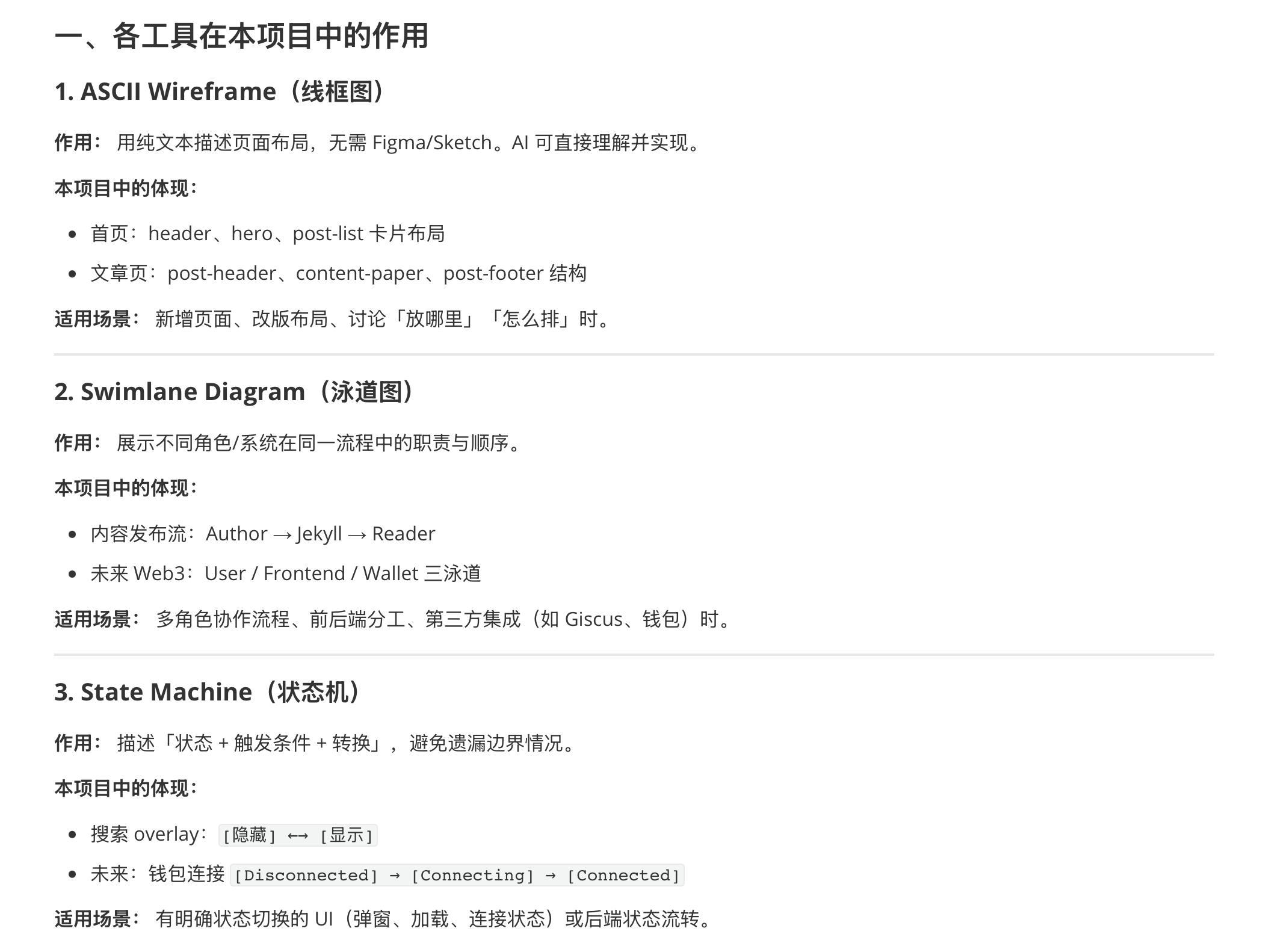
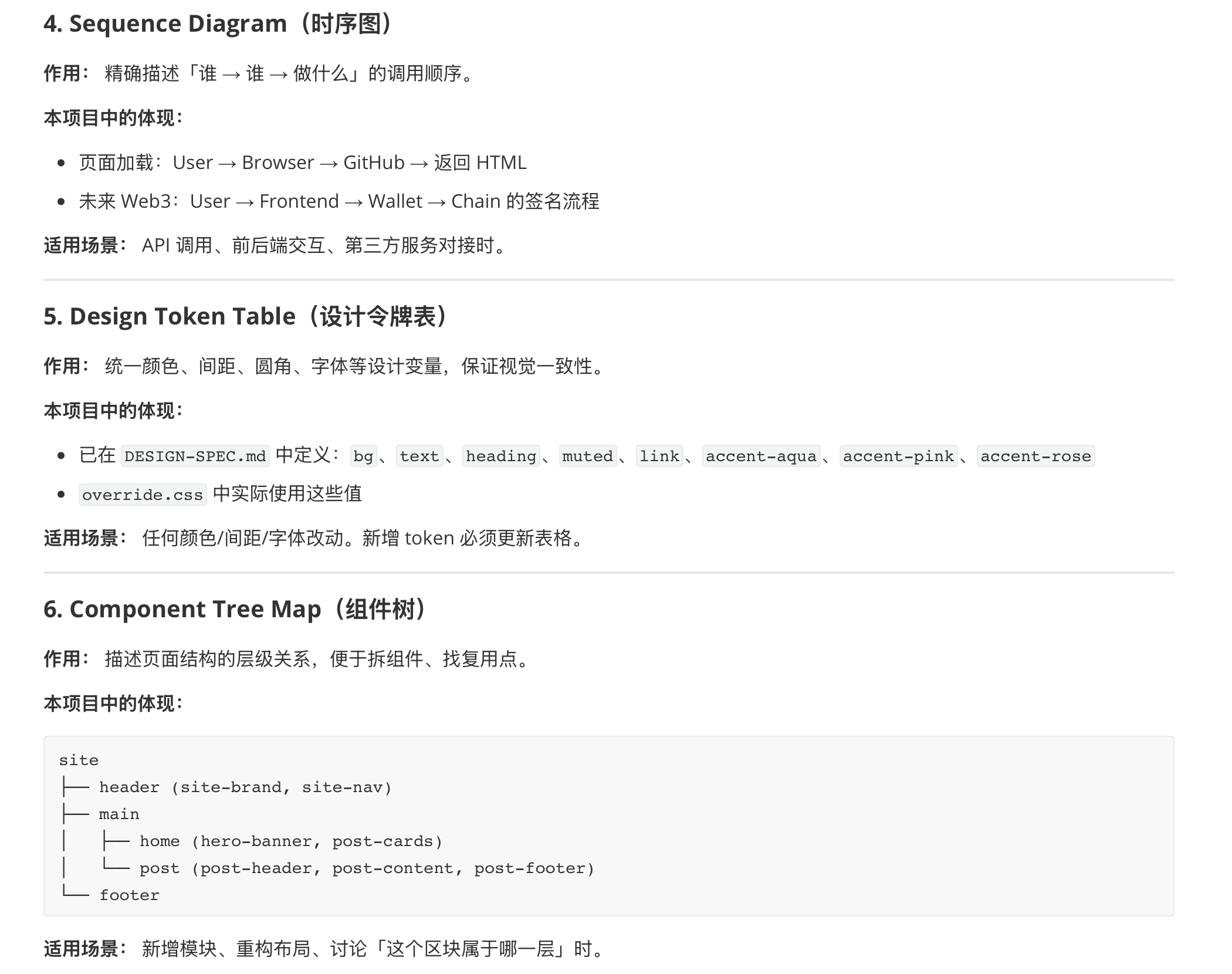
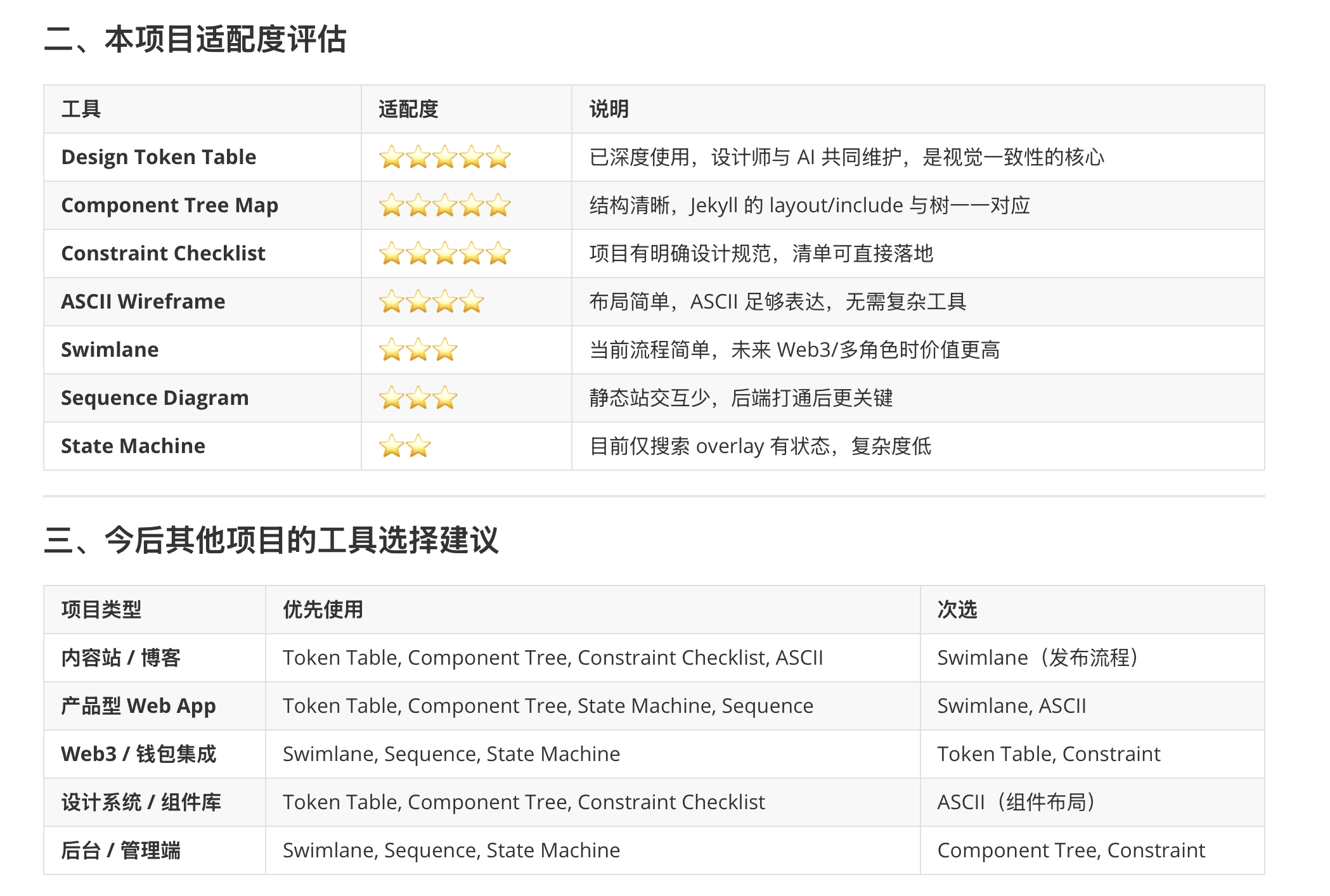
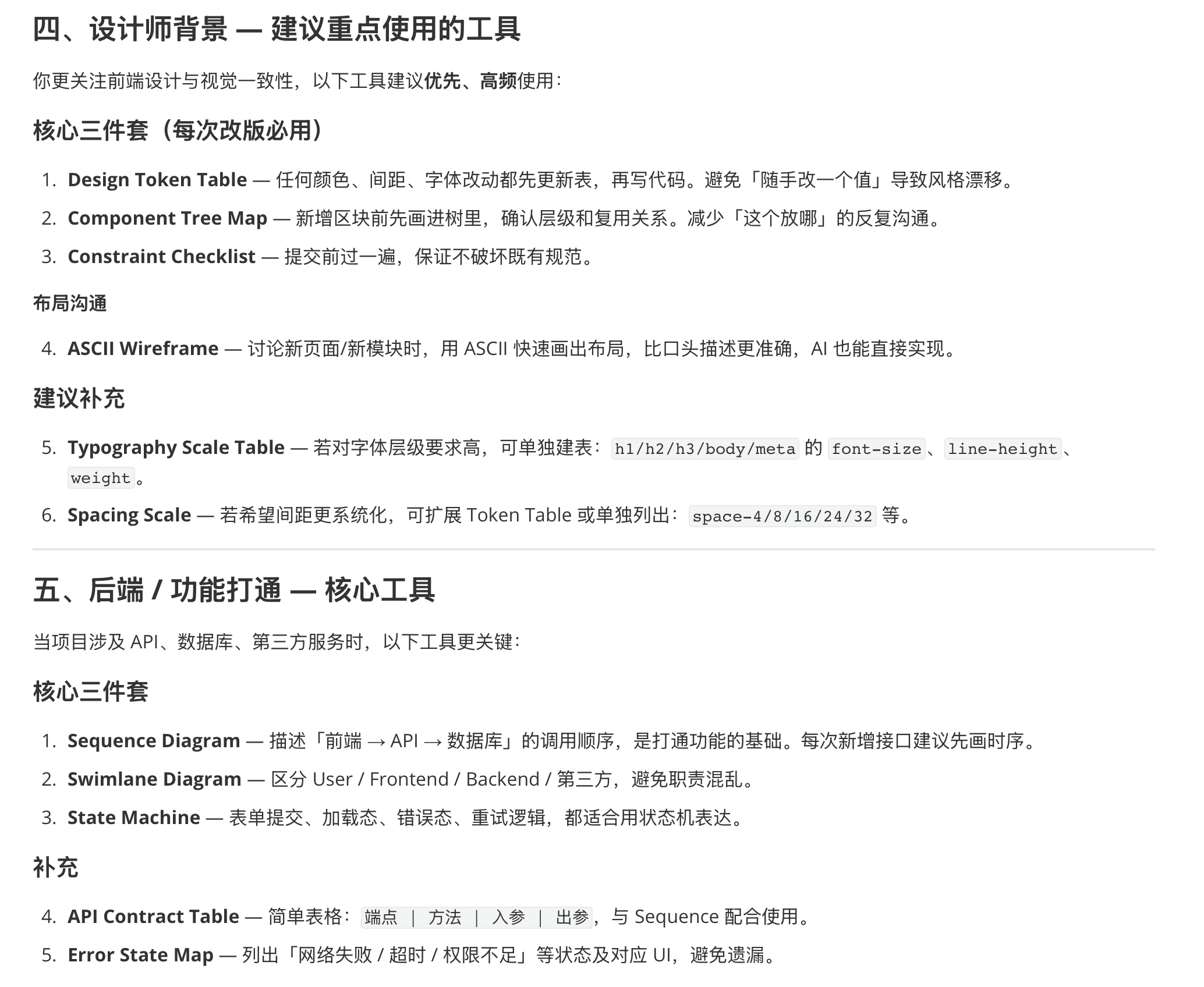
Markdown 是一个关键工具。
它是 AI 最容易准确理解的结构格式。
用 Markdown 与 AI 交流,会极大提升输出准确度。
这也是我未来会持续分享的部分 ——
如何构建 AI workflow。
为什么我要公开构建
我决定 build in public。
因为我知道——
像我这样的人很多。
非计算机背景。
正在转型。
对未来焦虑。
但不愿意停留在焦虑里。
如果这篇文章对你有帮助,
如果你希望看到更多关于 AI + Web3 workflow 的实践,
你可以关注这个博客。
如果你愿意支持我持续公开构建,
可以通过 GitHub Sponsors 支持这个项目。
支持不仅是金钱。
它是对长期主义的认可。
未来,我会持续分享:
- AI 协作方法
- Web3 学习路径
- 项目构建实践
- 系统化思维
如果你正在从 0 开始,
或许我们在同一条路上。
From Designer to Building in Public: A New Start
Why I believe AI + Web3 is the direction of the future.
This is the first post on the blog platform I built myself.
It represents a shift.
From designer to developer.
More precisely, a vibe coder.
Including this blog, this is the 20th project I’ve built with AI collaboration.
Two years ago, I wouldn’t have imagined building products with code.
But the structure of the world is changing.
When the Industry Shifts
After the pandemic, the fashion industry I worked in was heavily impacted.
Western companies gradually withdrew from China.
Opportunities in international design environments declined.
In 2024, I went through 7 rounds of interviews over 5 months with a U.S. company.
It ended due to budget cuts.
That was the first time I truly felt structural change.
I realized I couldn’t rely on old pathways anymore.
AI as Leverage
For over two years, I’ve collaborated closely with ChatGPT.
It helped me refine resumes, structure knowledge, analyze industries, even understand my personality.
It became my co-pilot.
So when I joined Injective’s codecamp in July 2025,
I wasn’t afraid of not knowing how to code.
I knew I could ask AI.
And I did.
From Solidity to EVM, from Bitcoin to Polkadot,
I studied whitepapers deeply.
Code is not isolated skill.
It’s structural capability.
My AI Workflow
Recently, I adopted a new workflow:
- NotebookLM for research and structure
- Markdown as structured communication
- Cursor for framework scaffolding
- Design Tokens, Component Trees, State Machines
This reduced friction dramatically.
A project planned for one week can now be built in three days.
I rarely write raw code.
I orchestrate systems.
AI doesn’t replace creators.
It amplifies them.
Why I Build in Public
There are many people like me.
Non-technical background.
Transitioning.
Curious.
Concerned about the future.
If this resonates with you,
I’ll continue sharing AI + Web3 workflows here.
If you’d like to support this journey,
you can sponsor the project via GitHub.
Support means alignment with long-term building.
We might be building in the same direction.