
How I Built My Own Creator Tool in Just 2 Days—Thanks to AI
我用 AI 只花 2 天,做出了一款属于自己的创作者工具
过去想做一款工具,门槛高到吓人:
你得会写代码、要找技术团队、要谈融资,少则几个月,多则半年一年才能上线。
但现在不一样了。
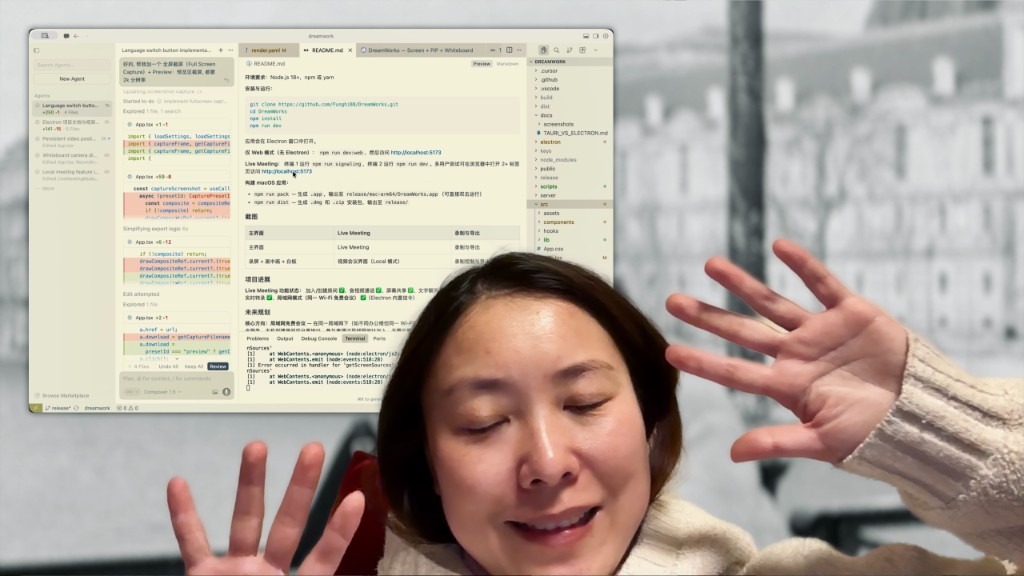
我用 Cursor + GPT,靠着最近很火的「vibe coding」,只用 2 天多一点,从零搭出了一款专门给内容创作者用的录制工具——DreamWorks。
这件事让我真正意识到:
2026 年,一个人,真的可以做出一款好用的产品
为什么现在一个人就能做产品?核心就三点
1. AI 正在把开发成本压到近乎为零
以前做产品,逻辑要自己想,代码要自己写,bug 要自己调。
现在分工特别清晰:
- GPT 帮我梳理产品逻辑
- Cursor 直接帮我写代码
- GitHub 负责发布和分发
过去需要一个团队,现在只需要一个人 + AI
2. 表达力,正在变成新的生产力
以前的路径是:
会写代码 → 才能做产品
现在变成:
会表达 → 就能做产品
你不需要成为技术大神,只要你清楚自己要什么、用户痛在哪,AI 就能帮你把想法落地。
3. 社交逻辑变了:工具就是你的名片、信任、流量入口
在一人公司、个体创业越来越普遍的今天,内容能力几乎是所有人的必修课。
而工具,就是你最硬核的「个人名片」:
- 工具 = 专业度
- 工具 = 信任感
- 工具 = 自带流量的入口
你不需要靠嘴说自己多厉害,你做的工具,已经替你说明了一切。
我为什么非要自己做一款工具?因为市面上的工具真的难用
做内容、做分享,我几乎踩遍了所有坑:
痛点 1:工具太割裂,思路全被打断
录屏要用 Loom,画图要用 Figma,开会要用 Zoom,梳理结构要用 Notion……
来回切换窗口,刚想好的表达瞬间断掉,灵感直接飞走。
痛点 2:只有画面,没有「人」
纯录屏很冰冷:
没人设、没情绪、没温度,观众很难跟你建立连接,更别说信任。
痛点 3:表达成本太高,不敢开口
要背稿、会卡壳、要反复重录,很多人刚想开始做内容,就被工具和心理压力劝退。
我当时就一个想法:
还没做出一条爆款,先被一堆工具折腾到放弃,太亏了
干脆,我自己做一个。
我直接把创作者最需要的功能,全部揉进一个工具里
DreamWorks 不追求大而全,只聚焦自媒体人真正高频用到的能力:
- 屏幕共享录制
- 圆形画中画摄像头
- 内置白板(Excalidraw)
- 实时会议连线
- 智能提词器
- 一键导出 MP4/WebM
我的目标很简单:
一个工具,从头到尾搞定表达,不用切换、不用学习、不用内耗
市面上的工具,贵就算了,隐形成本更可怕
我对比过一圈,价格其实只是表面问题:
- Loom:约 $12.5/月
- Camtasia:一次性 $299
- Screen Studio:约 $89/年
- OBS、ShareX:免费,但复杂到劝退
真正耗人的是隐形成本:
- 学习成本:花几天才搞懂怎么用
- 时间成本:来回切换工具
- 心理成本:越用越不敢表达
很多人不是没能力做内容,是被工具拦住了。
做这款工具,我真正悟到的 3 个关键认知(你也能直接用)
1. AI 不是工具,是你的「副驾驶」
我其实代码基础很弱,真正开始学也就没多久。
但我不需要写代码,我只需要做三件事:
- 提需求
- 定流程
- 盯体验
Cursor 写代码,GPT 讲逻辑,我负责「我要什么」。
人负责思考,AI 负责执行
2. 设计能力 = 产品能力
你不需要会敲代码,只要你能:
- 设计用户路径
- 梳理使用流程
- 组合功能模块
就能做出一款好用的产品。
产品的核心,从来不是技术,而是懂人
3. 工具就是你的「数字分身」
当你做出一款工具:
- 用户看到你的思考方式
- 自然产生信任
- 愿意主动连接你
- 甚至愿意为你付费
工具,就是你在互联网上永不休息的代言人。
DreamWorks 和传统录屏工具,本质完全不同
我做了一个很直观的对比:
- Loom、Camtasia、OBS、Screen Studio 这些工具:核心逻辑是 录制 → 剪辑 → 分享
- DreamWorks 的逻辑是:思考 → 讲解 → 录制
它不是一款「录屏工具」,而是创作者的「表达工具」——它从一开始,就为「把想法说清楚」而设计。

最后,一点关于这个时代的真实感悟
过去很多工具,是为了让人更高效地「干活」。
现在的工具,是为了让人释放自己,成为超级个体。
AI 最大的价值,不是替你干活,而是帮你搭建一套属于自己的表达系统。
未来真正厉害的能力,不是工程,不是设计,而是用 AI 搭建系统的能力。
DreamWorks 对我来说,只是一个开始;接下来我会继续优化,持续分享我和 AI 一起做产品的全过程。
如果你也想一个人做产品、做工具、做内容,我们可以一起边走边看,一路遇见风景。
How I Built My Own Creator Tool in Just 2 Days—Thanks to AI
A few months ago, the thought of building a tool by myself felt impossible.
You needed to know how to code, hire a team, or raise funding. Launching anything meaningful? Often months, sometimes over a year.
Fast forward to today: in just over 2 days, I built DreamWorks, a recording tool designed specifically for content creators.
No team. No investors. No months of frustration.
Just me, my ideas, and AI.
And it hit me: in 2026, a single person can launch a product that actually works.
Why one person can make a real product today
It comes down to three forces converging.
1. AI has slashed the cost of building to near zero
Before, building a product meant:
- Designing the logic yourself
- Writing all the code
- Debugging endlessly
Now, the roles are clear:
- GPT helps you shape the product logic
- Cursor writes the code for you
- GitHub distributes your work
The team that used to be 5–10 people? You + AI can do the same job.
2. Expression is the new productivity
It used to be:
“If you can code → you can build.”
Now it’s:
“If you can express → you can build.”
You don’t need to be a technical wizard. You just need to know what you want and understand the user’s pain points. AI translates that into reality.
3. Tools are your new social currency
In the age of solo ventures and one-person companies, your ability to create content is your baseline.
And a tool you make? It’s more than a tool:
- Proof of professionalism
- A trust signal
- A self-contained traffic engine
You don’t need to brag—your product speaks for you.
Why I had to build my own tool
I tried every content tool out there. Every. Single. One.
Pain Point 1: Tools fragment your workflow
Recording in Loom, drawing in Figma, meetings in Zoom, planning in Notion…
Switching apps constantly breaks your flow. Inspiration vanishes in seconds.
Pain Point 2: Cold, impersonal output
Screen recordings alone feel robotic. No personality, no warmth—trust is hard to build.
Pain Point 3: High psychological cost
Reading from a script, stuttering, re-recording endlessly… many give up before they even start.
My thought:
“I haven’t even made a hit yet, but I’m already exhausted from juggling tools. That’s insane.”
So I built my own.
What DreamWorks does
I focused only on what content creators actually need daily:
- Screen sharing + recording
- Round picture-in-picture camera
- Built-in whiteboard (Excalidraw)
- Live collaboration
- Smart teleprompter
- One-click export to MP4/WebM
Goal: a single tool that handles everything—no switching, no learning curve, no friction.
Why existing tools fail
Cost isn’t the biggest issue:
- Loom: $12.5/mo
- Camtasia: $299 one-time
- Screen Studio: $89/yr
- OBS / ShareX: free but too complex
The hidden costs are worse:
- Learning curve: days to understand
- Switching cost: constant context changes
- Psychological cost: intimidation grows with use
Many don’t lack skill—they’re blocked by the tools themselves.
Three insights from building with AI
1. AI isn’t just a tool—it’s your co-pilot
I’m far from a coding expert. I just had to:
- Express my needs
- Map the workflow
- Oversee the experience
Cursor coded, GPT reasoned, I decided.
Humans think. AI executes.
2. Design = Product
You don’t need to code. If you can:
- Design the user journey
- Plan the experience
- Combine functional blocks
…you can make something people love.
The essence of a product has never been code—it’s understanding people.
3. Tools are your digital twin
A product shows the world how you think:
- Builds trust automatically
- Invites collaboration
- Can even monetize directly
Your tool becomes your silent, tireless ambassador.
How DreamWorks is different
Traditional recording tools:
Record → Edit → Share
DreamWorks:
Think → Explain → Record
It’s not a screen recorder—it’s a creator’s expression tool, designed from the ground up to help you say what you mean.
The bigger picture
Old tools made people more efficient at doing work.
New tools help people become super-individuals.
AI’s real power? Not doing your work.
It’s building a system that amplifies your ability to express yourself.
The skills that will matter most in the future aren’t coding or design—they’re the ability to assemble systems with AI.
DreamWorks is just the start. I’ll keep iterating, sharing, and building alongside AI.
If you want to make a product alone, create tools, or share content, the path is clear: start small, start now—and let AI do the heavy lifting.